Virtual Cards vs Physical Cards: What Works Best for Nigerians?
Virtual cards vs physical cards in Nigeria: see how they differ, what each is best for, and why you may need both.

Nigerians have quietly become two-card people. You've got the debit card in your wallet for real-life stuff, and the virtual card living in your phone for internet stuff. Team Physical Card or Team Virtual Card? Truth is, most Nigerians are already on both sides. We've basically built an entire dual-card lifestyle without anyone announcing it, and the numbers prove it's not slowing down.
POS transactions shot up 301.5% year-on-year in early 2025 alone. Meanwhile, virtual card usage has been on an absolute tear since 2023. Two totally different cards, both booming at the same time, both doing very different jobs. Let's talk about why.
The physical card: the OG that refuses to retire
The most recent data available tells us that plastic cards aren't going anywhere as statistics shows that 36% of Nigerians above age 15 own a debit card, and Verve alone, one of Nigeria's largest card schemes has issued around 35 million active payment cards. Debit cards in Nigeria kept growing in both circulation and transaction volume through 2025, even as the pace eased slightly from 2024, largely because cash shortages loosened up and inflation made households more careful with spending.
What really spiked physical card use was the 2022–2023 naira redesign and the cash scarcity crisis that followed it. When ATMs ran dry and cash became genuinely hard to find, Nigerians leaned harder than ever on their debit cards for everyday transactions, POS payments and market purchases. A habit millions of Nigerians picked up during the crisis and never dropped. That's literally why POS transactions are still exploding today.
And to be fair, physical cards are just built differently for certain things: Slotting cards at POS, still king at every corner shop and market stall. Pulling actual cash from an ATM when you need it. Paying in person when there's zero online option and working even when your data is finished and Wi-Fi is a myth.
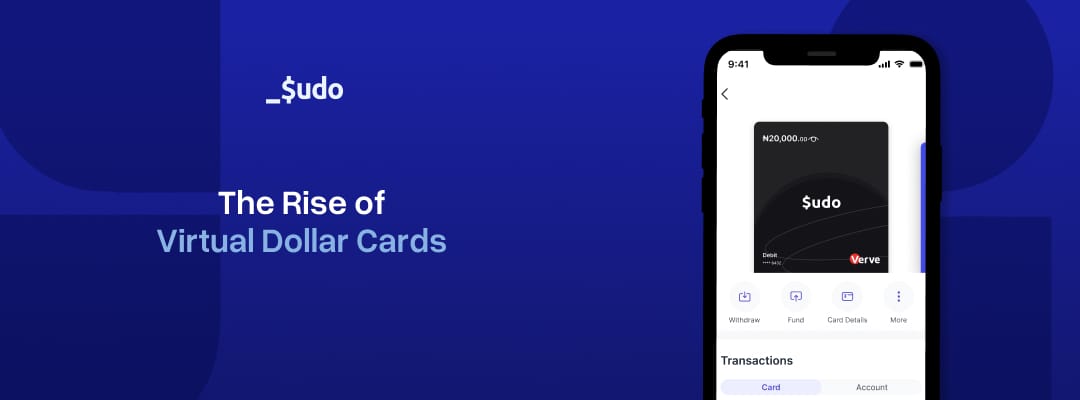
The virtual card: born out of pure frustration
Now, here’s where it gets interesting. Over the past few years, virtual dollar card usage in Nigeria has grown significantly, with the growth becoming particularly noticeable from 2023. So, what sparked this? Naira card restrictions on foreign transactions.
With dwindling FX and the need to conserve foreign exchange, banks slashed international spending limits on naira cards years ago and for a long stretch, many naira cards couldn't pay for anything foreign at all. The old workaround for a domiciliary account requires multiple bank visits, heavy documentation, and minimum balances requirement. Not realistic for a student or young freelancer.
Fintechs saw the gap and rushed in. The result: hundreds of thousands of Nigerians now use virtual dollar cards and virtual Naira cards, a number that's risen sharply since 2023, largely because fintechs made virtual cards accessible without needing a domiciliary account at all.

The bigger picture
Zoom out and it's the same story everywhere, cashless payments in emerging markets are growing over 12% a year, card payments are leading that charge, and NIBSS data shows the same steady climb happening right here at home. Better security tech (biometrics, tokenisation) is only making people trust cards more, physical or virtual.
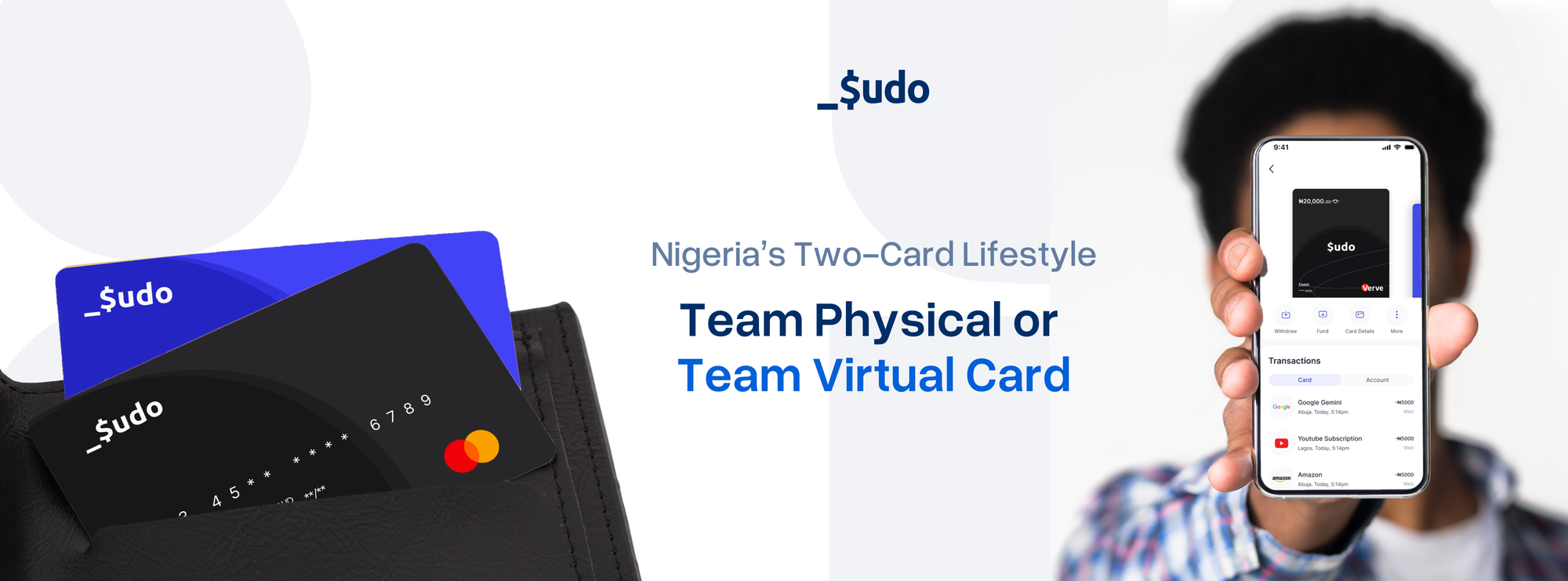
So... which one actually wins? Neither, honestly, stop trying to make them fight. Your physical card is the one showing up for real life: slotting at a POS in your local shop, pulling cash from the ATM when you need it, paying someone face-to-face, and still working even when you've got zero data or no app in sight.
Your virtual card, on the other hand, is the one covering your online life: Netflix, Spotify, Apple Music, Amazon, Shein, ASOS, freelance and remote payments, instant setup with no branch visit required, and, this part's underrated, keeping your real account hidden from sketchy websites so a bad link can't touch your actual money. Different battles, different weapons. That's the whole point.
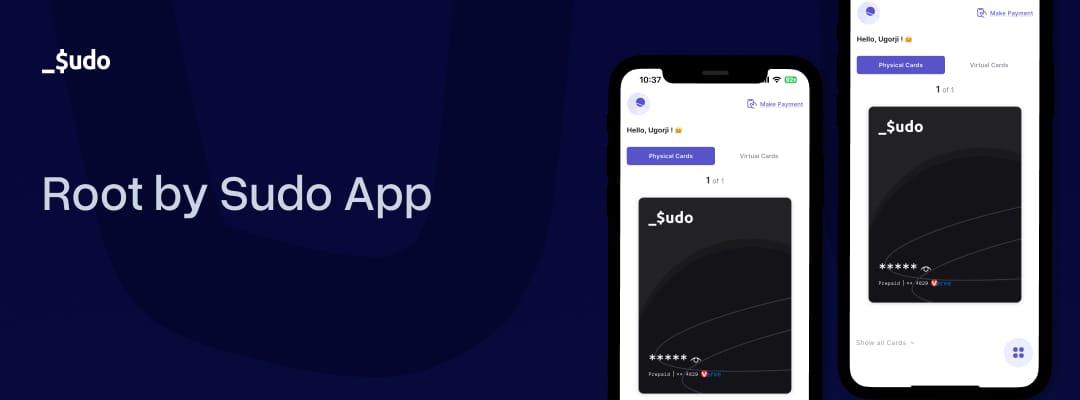
Whatever You're Paying For? Root by Sudo Has a Card for it
This is basically why the Root by Sudo app is worth knowing about. It doesn't make you choose between the two, you get a physical card for your everyday, real-world spending, a virtual naira card for local online payments, and a virtual dollar card for international transactions like Netflix, Amazon, and subscriptions that naira cards just can't touch. All three, from one app, one account, zero stress.
Bottom line: Nobody planned this two-card life, it just happened. Cash scarcity trained us onto physical cards. FX restrictions and a generation working remotely pushed us onto virtual cards. Both are still growing, and honestly the smartest move is just having both. ideally through a bank or platform that isn't making you jump through hoops for either one.